Forklifts are already indispensable in warehouses, factories, and building sites. But with the appropriate attachments, their capabilities become even greater. The add-ons assist organizations with dealing with various types of loads securely and proficiently while additionally cultivating the day to day functional efficiency.
The standard forklift can become a multi-tasking handling machine with attachments for lifting awkward materials, moving drums, and bulk goods. This guide will describe what they are, how they work, and when to use them.
What are Forklift Attachments?
Forklift attachments are specialised tools attached to forklifts that help to improve their lifting and handling capabilities. Operators can use equipment that is made for niche materials or tasks, instead of basic forks.
These attachments being utilised in:
- Warehousing
- Manufacturing
- Agriculture
- Construction
- Freight and logistics
With the right attachment, firms can function more efficiently, lower labour costs, and enhance workplace safety.
How Forklift Attachments Work?
Normally, these attachments really connect to the forklift carriage or forks themselves. Some have hydraulic movement, others have mechanical systems.
The smartest attachment will customize the handling capability of the forklift according to the required task. For instance, clamps can hold materials tightly in place, while rotator enables operators to dump or tilt containers.
Always check that the forklift can safely handle both the added attachment weight and load capacity before moving forward.
Common Types of Forklift Attachments
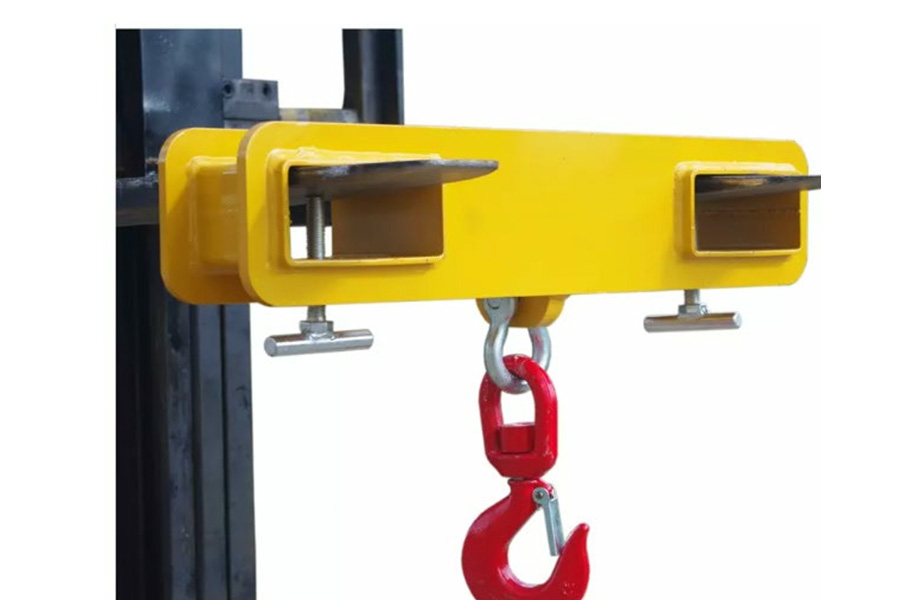
Forklift Jib Attachments
Run by forks mounted jibs which allow you to hoist suspended loads with a hook or chain. They basically transform a forklift into a crane on wheels.
These trailers are commonly used for:
- Lifting pipes
- Moving machinery
- Handling steel beams
- Construction site lifting
Forklift jib attachments are typically preferred by business owners, as they benefit from flexibility where regular forks are not fit for purpose against awkwardly shaped, oversized loads.
Drum Handling Attachments
These attachments allow for safe lifting and transporting of drums. They reduce the likelihood of spills and increase handling speed in warehouses and factories.
Fork Extensions
Fork extensions extend the reach of normal forklift forks. These forklifts are good for over-sized pallets or over-length materials.
Bin Tippers and Rotators
Optional attachments allow operators to angle bins or hoppers for controlled dumping. They are commonly used in the waste management and recycling industry.
When and How to Use Forklift Attachments?
To Improve Workplace Safety
Just as the case with packing and handling these special or hefty lumps by hand represents a huge safety hazard. Proper forklift attachments decrease strain on workforce and lessen the chance of accidents.
To Increase Efficiency
Forklift attachments enable forklifts to finish special tasks quickly. This minimises downtime and enables a good workflow in busy workplaces.
To Handle Special Materials
There are some industries where the equipment is to be in operation are designed for specialised loads. Forklift jib attachments allow you to safely lift the suspended material that is not safe to set on standard forks.
Choosing the Right Forklift Attachment
Things to consider before buying:
- Forklift lifting capacity
- Type of materials handled
- Workplace environment
- Frequency of use
- Safety compliance requirements
Always go for rugged attachments that are designed for Australian work standards and industrial conditions.
Final Thoughts
Forklift attachments can be used to improve actual material handling efficiencies and workplace safety amongst other benefits. Attachments assist companies in moving pallets, drums, or suspended loads quickly and with more control.
Businesses in the heavy and awkward item handling industry can take advantage of forklift jib attachments to provide a low-cost reliable lifting option and a cost-effective means of transferring serious weight with relatively low effort.